
Spanish Lessons for Travelers
After returning from his trip to Argentina, my client told me: “I’m surprised how much Spanish was spoken there.” What he meant was: “I’m surprised how little English was spoken.”

His comment wasn’t ill-intentioned, just ill-informed. It was my job as his advisor to prepare him.
Native English speakers are spoiled. Our mother tongue is the universal second language across much of the world. North Americans who start their international travels in Europe – where English levels are quite high – often take for granted that they can get around without speaking a word of the local language. This is why my client, whose trip to Argentina was his first to Latin America, was surprised that English wasn’t widely spoken or understood.
This is what I wish I had shared: levels of English vary across Latin America, and between countries, and across demographics. Here are some rules of thumb to keep in mind for any trip to the region:
Younger generations tend to speak more English than older ones (largely thanks to the social media, video games, globally distributed TV and movies.)
People working in tourism are likely to speak English. You can count on guides and front desk staff, but drivers and airport staff can be a mixed bag.
As you get off the beaten path, English will be less spoken. For example, English is typically more widely spoken in cities than rural communities. A waiter at a Michelin starred restaurant may have a great command of the language, but a server at a-hole-in-the-wall may not.

People in the service industry all over the world will tell you how annoying it is when people start an interaction with an assumptive “Do you speak English?” They will also tell you how common it is.
I believe that when traveling to another country, it is our responsibility to learn a few phrases of the language. Greeting someone in the local language goes a long way, and can start an interaction with goodwill. It can feel uncomfortable, but it is necessary. Here are my tips:
I often listen to Michael Thomas’ audiobooks for a quick orientation to a language before departing (I’m currently working my way through his Foundational Italian lesson.) They are usually 8-10 hours long and are designed to simply be listened to – no note-taking required. Many are available on Spotify.
In a pinch for time, I’ll Google Translate some basic phrases and save them in my phone to memorize on the flight over.
In the Google Translate app, download the local language offline. This allows you to translate a phrase even without internet connection. Don’t just show the translated phrase to someone; try to memorize it on the spot and say it out loud!
Perfection is not the goal. The goal is to show an openness and respect.
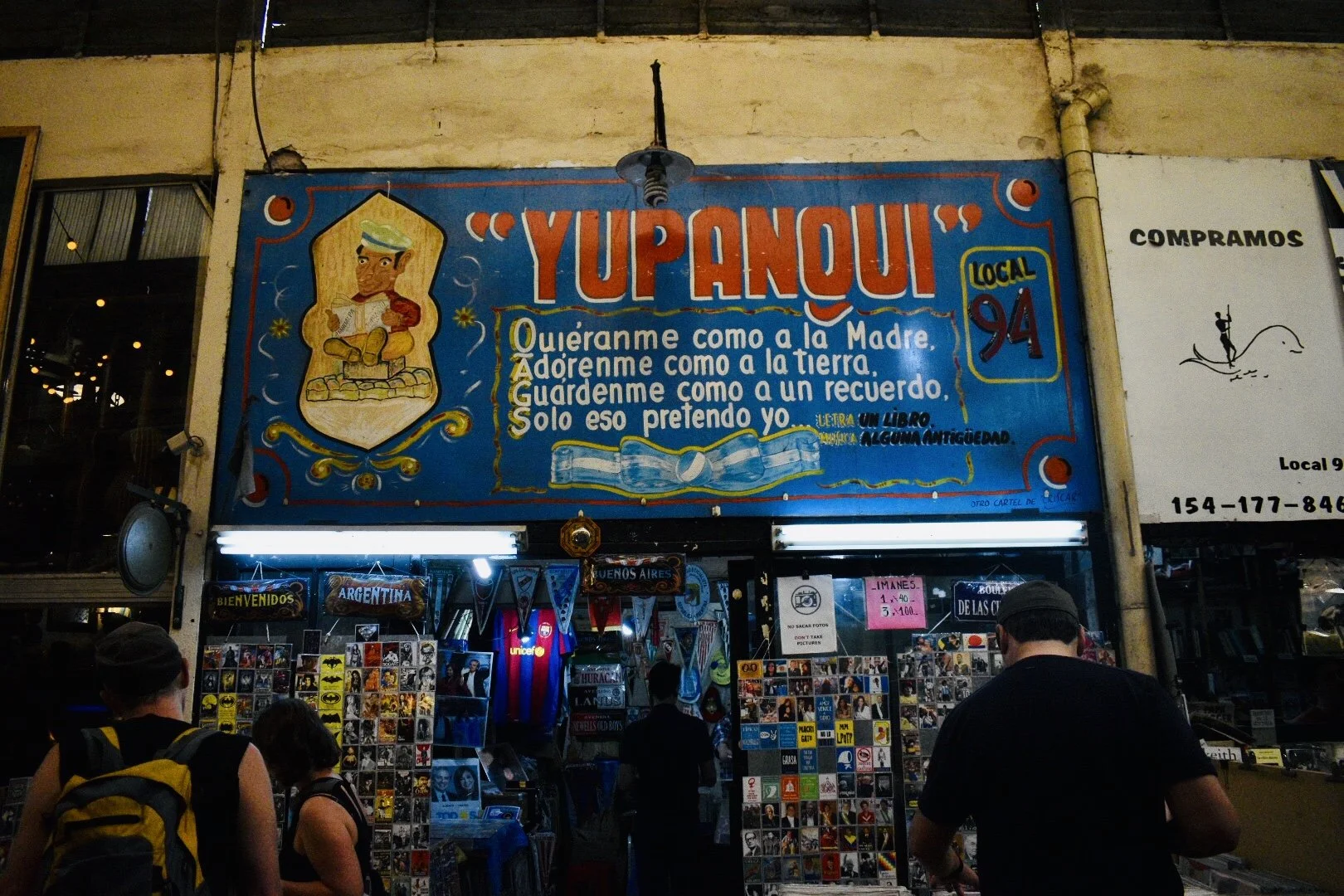
Here are some key phrases in Spanish that will serve any traveler well. The idea is not to be perfect, or to ace the pronunciation, but simply to try.
Hello, how are you? / Hi, how’s it going? Hola, cómo está? / Hola, qué tal?
Good morning (use until lunchtime) Buenos días
Good afternoon (use from lunchtime to sunset) Buenas tardes
Good evening/good night (use after sunset) Buenas noches
Thank you very much Muchas gracias
Please Por favor
Where is...? Dónde está...?
Do you have a table for two? Tiene una mesa para dos?
Can I order...? Puedo pedir...?
The check, please. La cuenta, por favor.
How much is it? Cuánto cuesta?
Can I pay with card/cash? Puedo pagar con tarjeta/efectivo?
Forgive me, my Spanish level is very low. Do you speak English? Perdóneme, mi nivel de español es muy bajo. Habla inglés?
By any chance, do you speak English? Por casualidad, habla inglés?
Your country is very beautiful. Su país es muy lindo.
Excuse me (to get attention) Disculpe
Sorry! (if you make a mistake/bump into someone) Perdón!
Bye! Chau! / Adiós!
Speaking the language is one thing, but understanding customs is another. Even if your Spanish is limited to hola and adiós, bearing these customs in mind will get you a long way:
In many Latin American cultures, jumping straight into a question (like "Where is the bathroom?") is seen as blunt. Always start with a "Buenos días" or "Buenas tardes" and a quick "How are you?" before asking for what you need. It changes the entire energy of the interaction.
Spanish has two ways to address someone: formal and informal. Who you speak to formally varies based on the country. To be safe and to avoid offending anyone - it’s best to address people formally rather than informally. The table above reflects this.
When in doubt, use your hands . If you completely blank on the word for "spoon," don't panic. Latin American culture is expressive. A smile and a bit of miming will almost always get you what you need. The effort to connect is always more important than the vocabulary.
Just as travelling within the English speaking world, accents and vocabulary vary by country in Latin America. Don’t be discouraged if your high school Spanish isn’t carrying over. So long as your pronunciation isn’t totally off, native Spanish speakers should understand you, even if your accent is different from theirs.
Finally, remember that Portuguese is spoken in Brazil! While the general guidelines and suggestions apply, but the language is different.