
An Advisor’s Guide to the Galapagos

Choosing the right way to see the Galápagos is an important decision for your clients, and it can be hard to know where to begin when having this conversation. It can also be very easy to get into the weeds with seasonality, island, and wildlife details, which is something you want to avoid unless you are a Galapagos expert. Getting dragged down by the details can confuse your client and leave everyone feeling uncertain about next steps and making the “right” itinerary choices.
These are a few questions you will want to ask and topics to consider to guide your clients toward the right exploration style:
Which animals do they want to see?
Land vs. Cruise?
If cruising, how many nights?
Are travel dates fixed or flexible?
We made a white-labeled guide for you to send directly to your clients. It’s designed to give clients an understanding of the islands and save you time in the education process.

Question 1: Which animals are the most important for your clients to see?
This question really determines the ‘WHY’ behind your clients’ trip, and is the most important first question. Are they just looking for the general Galapagos experience, or do they have specific animal sighting hopes?
Some wildlife only live on certain islands, and some are more active during certain seasons. Overall, you will see more animals on a cruise than by staying on land; however, you may not necessarily see more species of animals on a cruise vs. land.
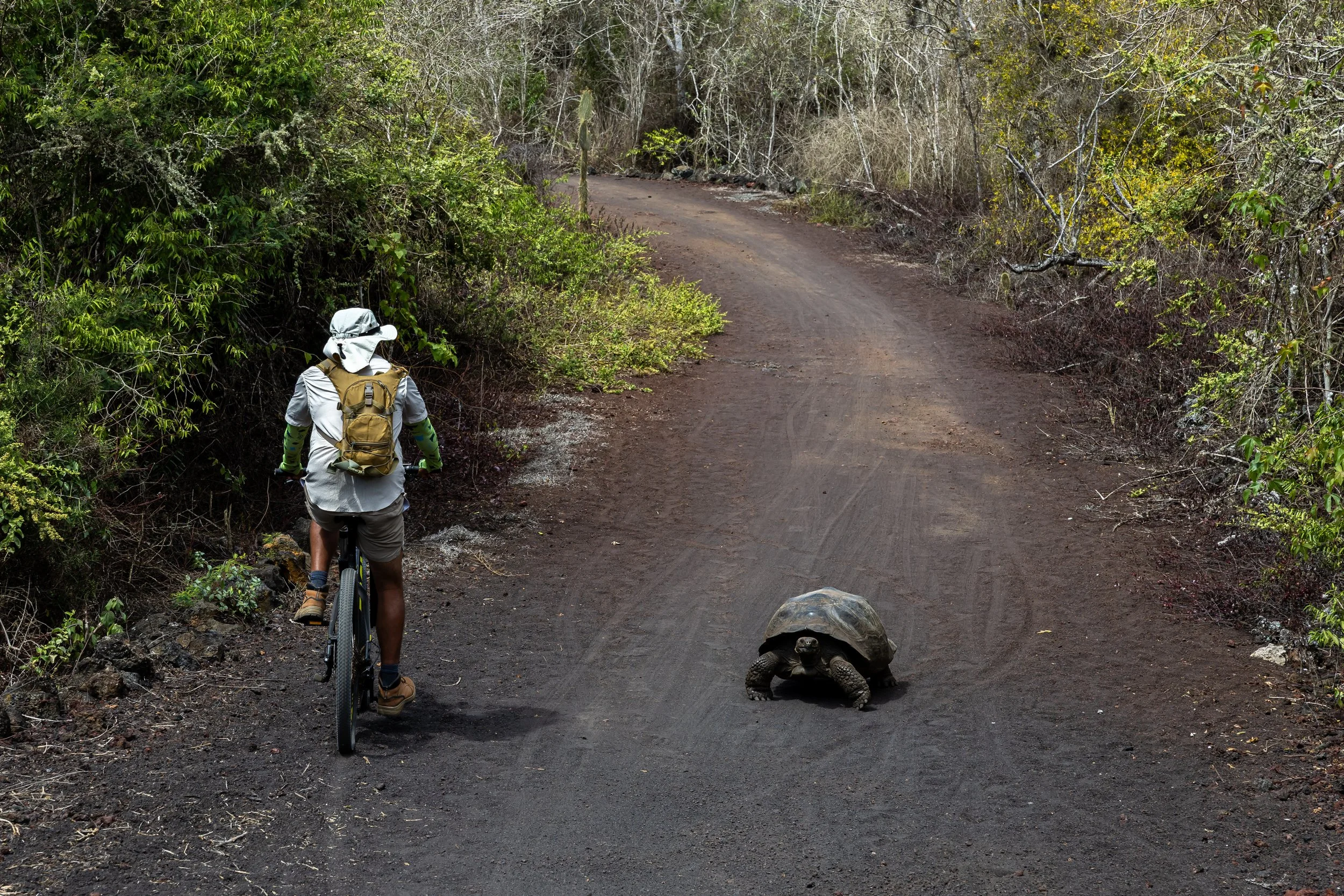
Question 2: Land or Cruise?
Each method of exploring the islands has its benefits and its drawbacks. One is not better than the other, it’s a matter of understanding your clients’ tastes, priorities, and travel style.
Cruising:
The principle benefit of cruising is that you are traveling while you eat, sleep, and relax. You can cover more ground, and visit landing sites otherwise inaccessible.
The most important drawback of cruising is that dates, itineraries, and excursions are fixed. Aside from taking care to select the best matched cruise, there is not much personalization to be done. Further, families traveling with young children may feel constrained by the strict schedule.
Guide to guest ratio varies on the cruise size (typically 1:12)
All Galapagos cruises are expedition cruises - the cruise for people who “aren’t cruise people”; not only are you traveling with the best naturalist guides in the area, but the intention for these cruises is to get you off the boat as often as possible. Travelers disembark 3-4 times each day for island hikes, wildlife viewing by zodiac, snorkeling, kayaking, and swimming.
Some animals, like the red-footed booby (not to be confused with blue-footed, which are easier to find), the flightless cormorant, the waved albatross, and the fur seal, cannot be seen by day tripping from a hotel, and in some cases, these animals can only be seen on a 7-night cruise because they reside on only the furthest islands.
Staying on land:
The main draw of a land stay is is the opportunity for flexibility and personalization. Excursions can be done with private guides, and can be highly tailored to your client. These excursions vary from exploring the island on which they’re staying (hiking, biking, kayaking, the list goes on!), to taking a boat trip to a nearby island for a bite-sized cruise experience.
By staying on an island (or several), travelers get a more in-depth exploration of their home base. While cruise passengers move on after their excursions, land-hoppers continue exploring and are left with a deeper experience, particularly with the human side of the Galapagos.
Hotels range from 5-star, all-inclusive, safari-style properties, to basic B&Bs.
Those who are anxious about seasickness will be happy to return to terra firma every evening.
Families with younger children are often happy to stay on land, where schedules are less rigid and the kids may feel less confined than on a boat.

Question 3: How many nights should you they go for?
The abundance of wildlife you can see on even just a day trip is what makes the Galapagos so special.
For those who want a general overview of the islands and the Galapagos experience, 4-6 nights is recommended. If staying on land, this is enough time to stay on either one or two of the habitable islands. Pro tip: combine a shorter cruise (2-3 nights) with a land lodge (2-3 nights). This provides a really comprehensive, varied Galapagos experience.
If your client has very specific priorities in mind - like seeing a number of elusive species - or a deep interest in the destination, go for 6-8 nights. If cruising, this allows them to access the lesser visited outer islands. If staying on land, this gives them time to cover all three habitable islands.
Also note that while the Galapagos is often a huge highlight and bucket list trip, but there are so many other places to visit in Ecuador’s mainland, like the Amazon Rainforest, the Cloud Forest, Quito and the Avenue of Volcanoes in the Andes. These destinations offer an interesting contrast to the Galapagos.
It’s always worth chatting with your clients to see if they have any time to add to explore the mainland.

Question 4: Finally, talk about travel dates and seasonality.
In the Galapagos there is really no “bad” time to visit (and it’s important to reassure your client of this if they have a specific month/dates for travel); but there are two distinct seasons.
December-June is warm and wet – there can be tropical rain showers that pass through, but the islands are lush and green, and the ocean is warm and calm – you may not need or want to swim and snorkel with wet suits. This is considered the high season.
The cooler, dry season from July-November brings cooler temperatures with low chances of rain, and the Humboldt Current, and is considered the low season. The Humboldt Current brings choppier, cooler waters, but this time of year the waters are teeming with marine life. During this season you will swim with wetsuits (always provided by boats).
The seas are roughest in August and September and boating day trips from a land lodge really aren’t recommended; a stable catamaran cruise is a better option.

Choosing the right Galapagos partner:
Since cruises run on fixed dates, it’s always best to take your clients’ window for travel without committing to an itinerary order, then bring these dates to your DMC so they can find the right cruise.
Once you’ve gathered all your information including wildlife wish list and cruise vs. land ideas, let your client know they’re in good hands with you and your team in Ecuador, who take the utmost care to ensure all of these details are considered for their itinerary.
We recommend working with a DMC who’s not tied operationally to a cruise line; that way your DMC will always remain neutral when choosing a Galapagos experience, ensuring the clients hopes and needs always come first.
Our DMC, Amazing Ecuador, works hard to always provide the right Galapagos experience for our clients. For anyone new to selling this region, Paul and Santi can take your client call notes and work their magic to provide exactly the right experiences for your travelers. Amazing Ecuador also operates independent ground services in Galapagos, so if your client wants a truly off-the-beaten path Galapagos journey, AE can provide island-hopping itineraries and private guiding along with the island’s best lodges.
Galapagos is an expensive, highly-regulated destination, and protecting it is everyone’s priority - make sure your clients feel that value with the right DMC, so that future generations can continue to enjoy the Galapagos Islands.
