
Most travelers know this corner of Patagonia as the place Antarctic expeditions leave from. They pass through Ushuaia for a night or two and move on.
It’s well worth selling as a destination in its own right. It's unpolished, unapologetically itself, and still relatively unknown. This guide maps out the big cities, the small towns, and the remote areas that are worth the road trip.
Getting your bearings
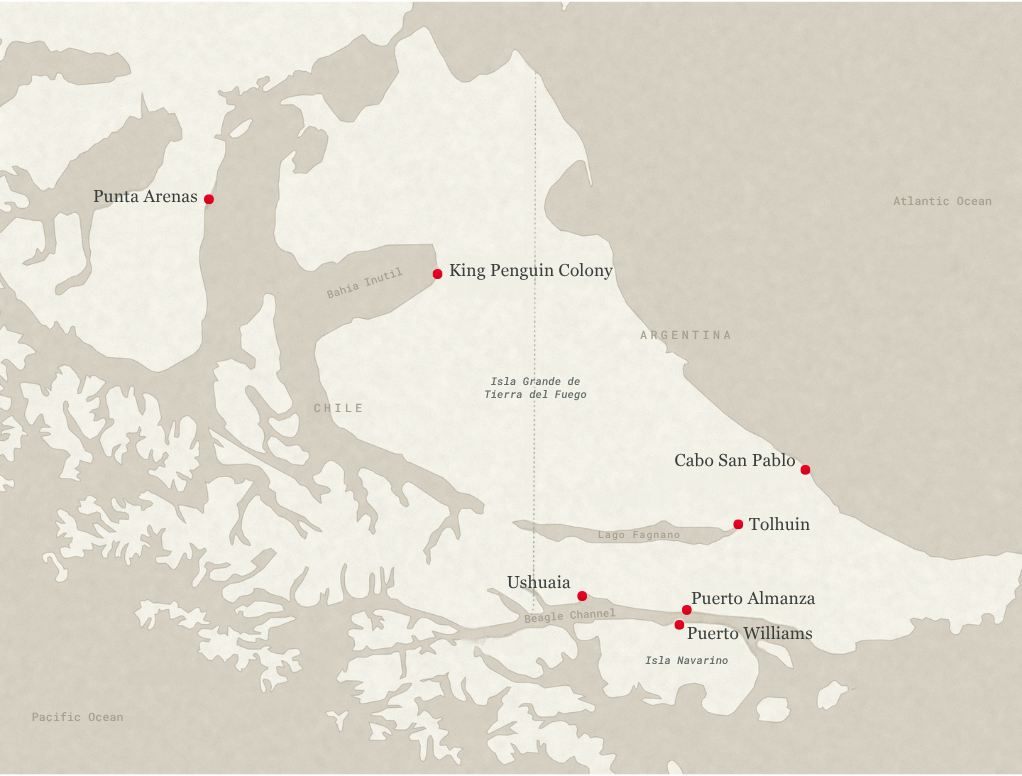
The Tierra del Fuego archipelago is the group of islands at the southern tip of South America, shared by Argentina and Chile.
Tierra del Fuego is just the name of one island, the biggest in the group. It issplit down the middle; the eastern half is Argentina, the western half is Chile. Along its southern coast runs the Beagle Channel, and across the channel sits Chile's Isla Navarino.
Getting there: the three gateways
Three towns anchor the region. All three have airports and serve as our logistical hubs.
Ushuaia, Argentina: The easiest entry point and the best base for first-timers. Flights connect from Buenos Aires and other cities in Argentine Patagonia.
Punta Arenas, Chile: The gateway to Chilean Tierra del Fuego, reached by ferry across the Strait of Magellan. Flights connect from Santiago and other cities in Chilean Patagonia.
Puerto Williams, Chile: The gateway to Isla Navarino. Take a small-plane flight from Punta Arenas (about 1 hour, Monday to Saturday) or a speedboat from Ushuaia. Luggage limits on the plane are tight, and both routes depend on the weather.
Ushuaia
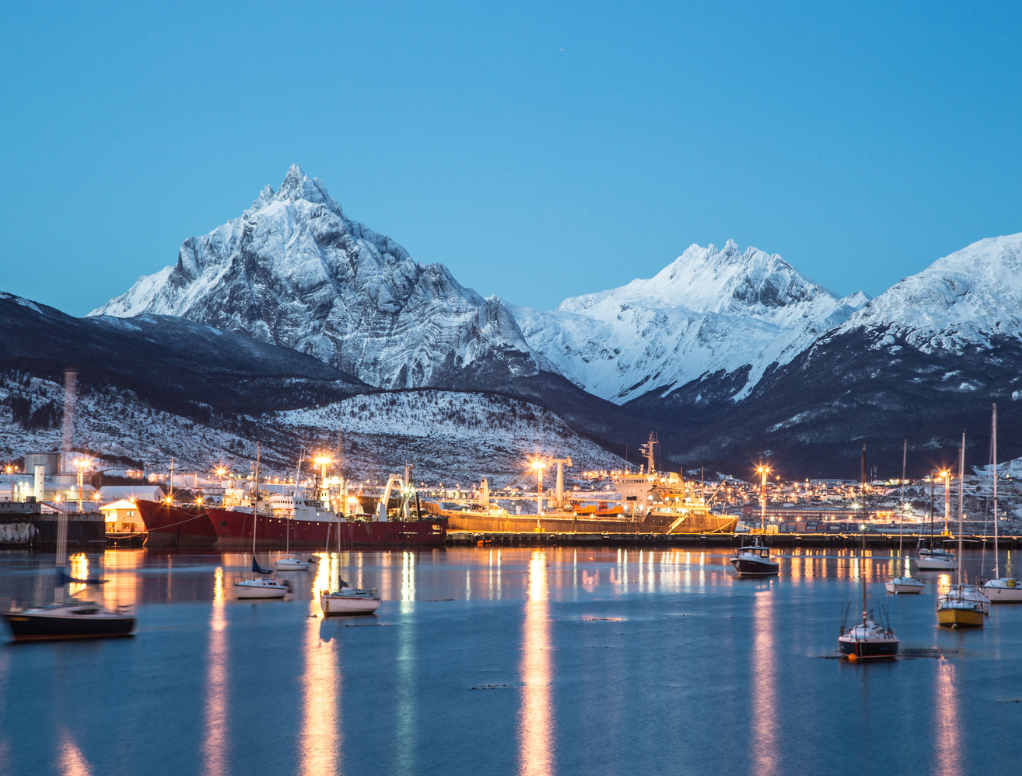
Ushuaia is the hub for first-timers, and it deserves more than the night or two most people give it on the way to Antarctica. We recommend 4 to 5 nights, which leaves plenty of time for the city and a couple of day trips.
The town started as a penal colony, and the old prison is now the Maritime Museum. Beyond town, the classics are Tierra del Fuego National Park, a boat out on the Beagle Channel to see marine life, and hikes up into the mountains right behind the city. Use Ushuaia as a base for Puerto Almanza and Cabo San Pablo, both covered below.
Where to stay:
Los Cauquenes Resort + Spa. Right on the shore of the Beagle Channel, about 15 minutes outside the city center, with a private beach, a spa, and sweeping channel views. The design is rustic, cozy, and elegant.
Arakur Ushuaia Resort & Spa. Perched on a hilltop inside a natural Nature Reserve, with forest trails starting right outside the door and views over the city and the channel. The design is hyper-modern.
Puerto Almanza
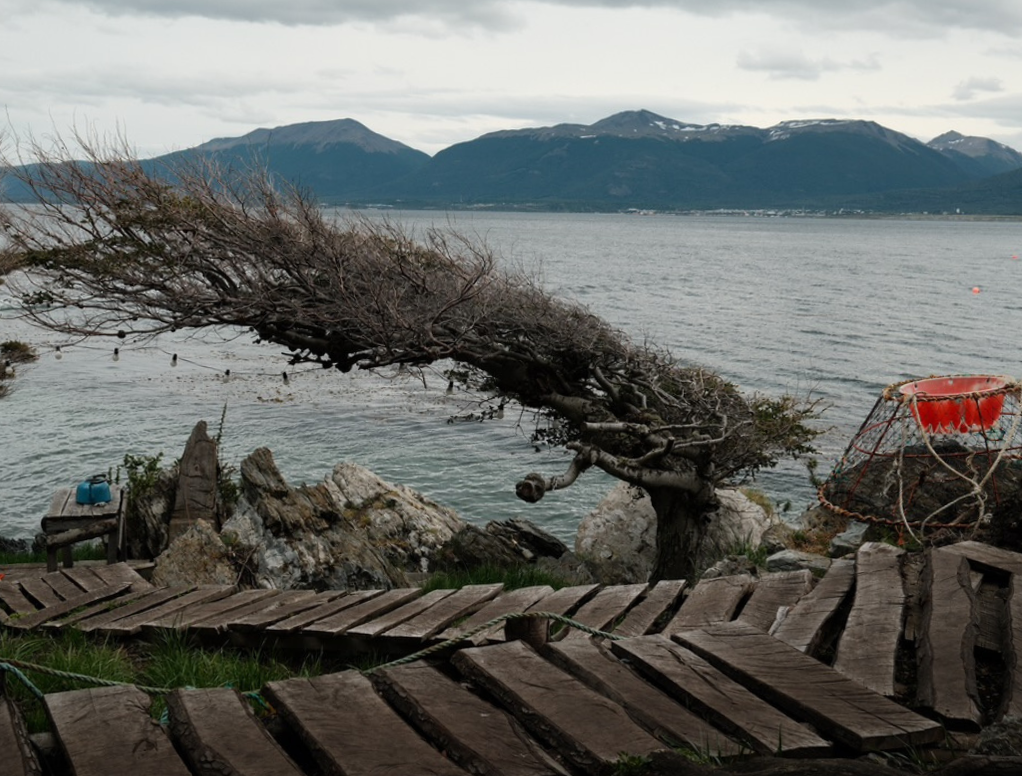
Puerto Almanza is a tiny fishing village on the Beagle Channel, about 72 km east of Ushuaia (roughly an hour and a half by car). It's the easiest, most rewarding day trip from the city. The village lives off king crab, and you can see Puerto Williams on Isla Navarino directly across the water.
The highlight is lunch at the home of the Beagle Channel's first female captain. She cooks tide-to-table meals in her whimsical home restaurant. Book this in advance through Onesixth Expeditions, our Argentina DMC partner.
Tolhuin and Lago Fagnano
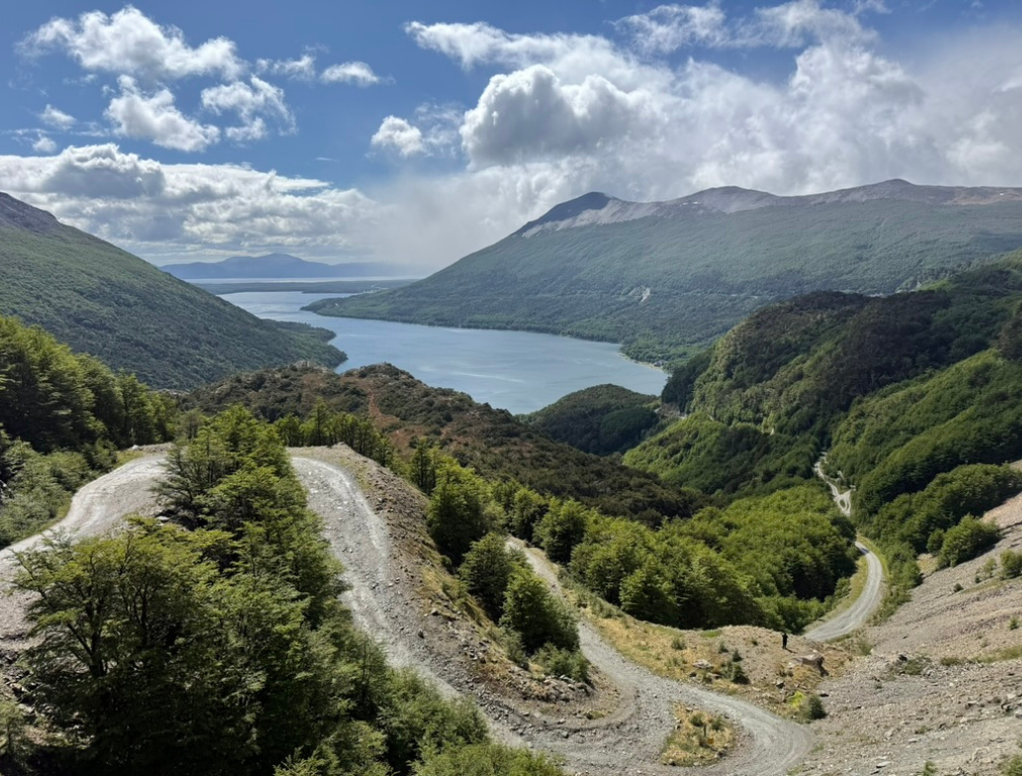
Tolhuin is a small town at the eastern tip of Lago Fagnano, about two hours north of Ushuaia. Getting there is half the point: the road climbs over Paso Garibaldi, the highest point of the crossing, then drops down past Lago Escondido to Fagnano.
Everyone stops at La Unión, the town bakery and a true community institution. It burned down and was rebuilt with the help of the whole town, an inspiring story. Tolhuin is a natural stop on the way to Cabo San Pablo, or a quiet night on the lake in its own right.
Where to stay: Hostería Kaikén. A simple, 16-room lakeside inn right at the head of Lago Fagnano, with big windows onto the water and a restaurant on site. Set expectations: this is classic, local, and unpolished, not a luxury lodge.
Cabo San Pablo
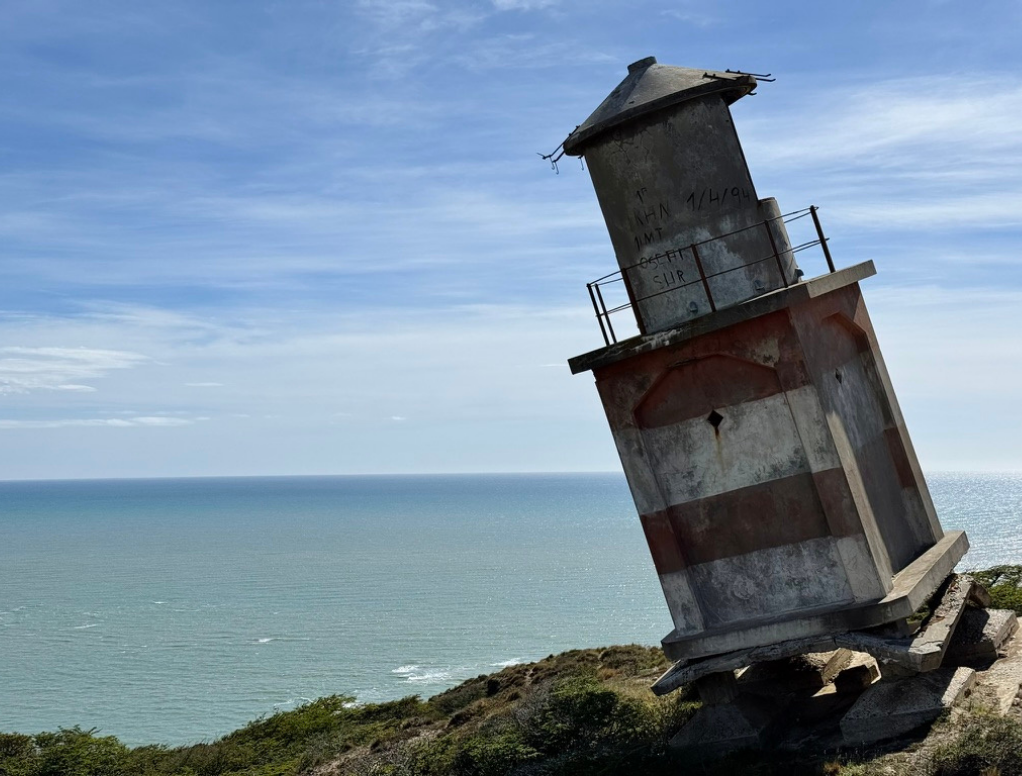
Cabo San Pablo is a remote stretch of Atlantic coast on the island's east side, about three hours from Ushuaia and 75 minutes past Tolhuin. The road leaves the mountains behind and runs out through forest and open steppe, where you'll see more guanacos than cars.
Two landmarks define Cabo San Pablo. An old lighthouse sits on top of the cape, a short but steep walk up. Below it, the rusting hull of the Desdémona has been stranded on the beach since the early 1980s. The official story is that it ran aground in a storm; the local story is that it was an insurance fraud. Like most stories down here, it doesn't fit neatly in a box.
It can be done as a long day trip from Ushuaia, but that's a lot of driving for a short visit. It's far better with a night or two out here.
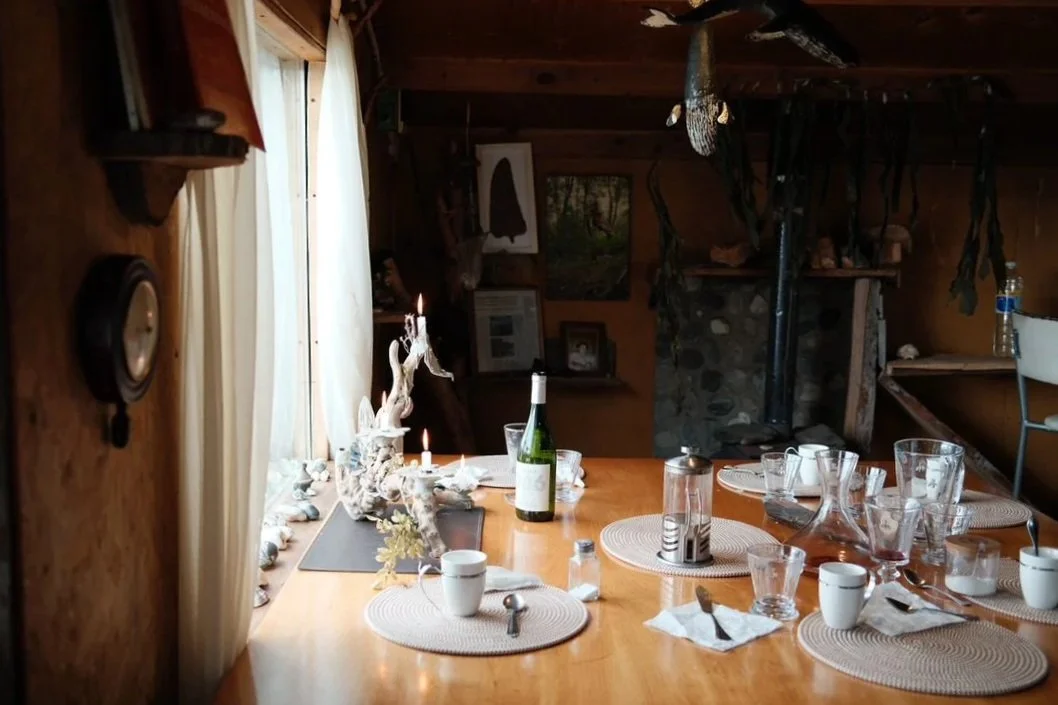
Where to stay: Estancia Cabo San Pablo. A historic estancia on the coast near the cape, where the owners welcome guests into their year-round home.
Chilean Tierra del Fuego
The Chilean half of the main island is wild, empty, and lightly visited. You can reach it by ferry from Punta Arenas (2 hours), or by road from the Argentine side of Tierra del Fuego.
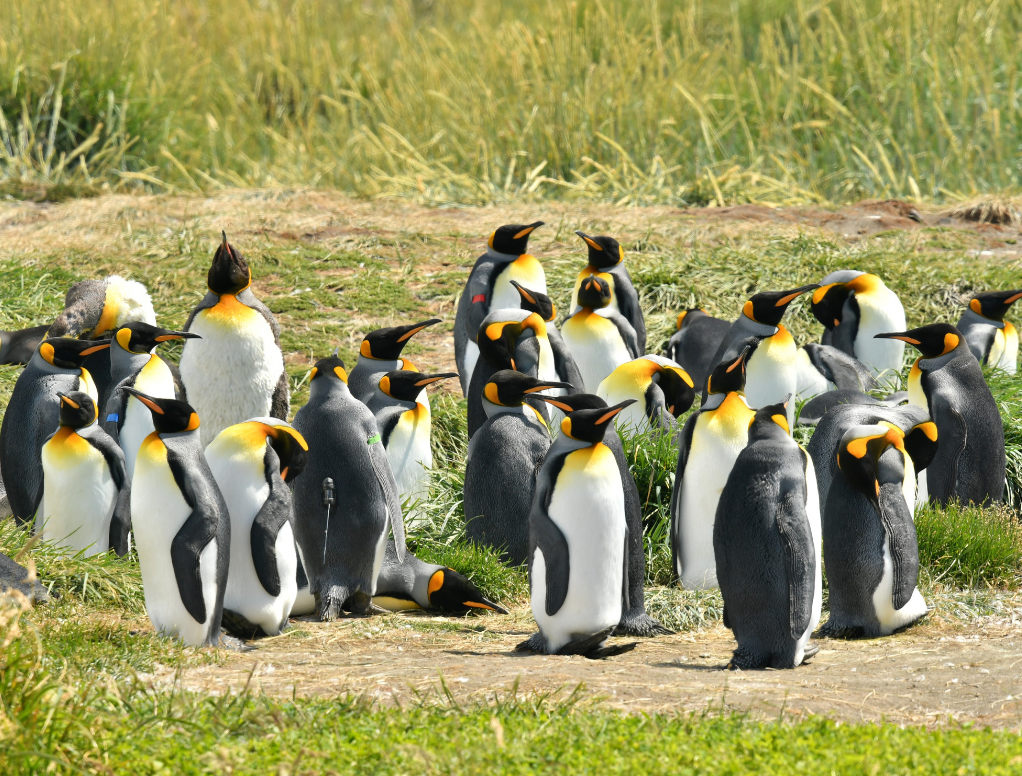
The best-known stop is the Reserva Natural Pingüino Rey on Bahía Inútil, home to the only king penguin colony in South America.
From there, keep driving south. The steppe gives way to forest, lakes, and mountains around Karukinka Natural Park and Lago Deseado, some of the most remote country anywhere in Patagonia. Lago Fagnano's western tip is in this corner too.
Where to stay
Lodge Deseado. A nine-room lodge, every room has a fireplace and a balcony looking over the lake. It's remote in the best sense, with guided excursions into the surrounding forest and mountains, and it's the place for clients who really want to get away.
Hotel Estancia Caleta Josefina: A newer option closer to the penguins, a boutique hotel on Bahía Inútil. A good place for a one-night logistical stop before or after seeing the colony.
Isla Navarino and Puerto Williams
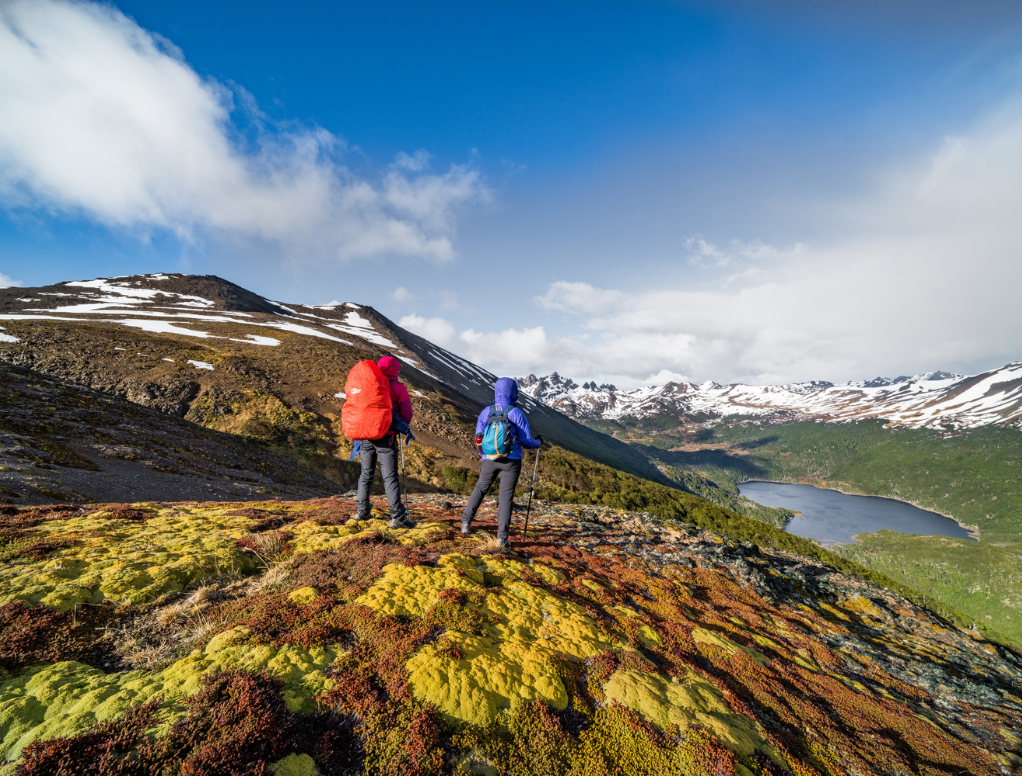
Isla Navarino sits just across the Beagle Channel from Ushuaia, and it's the whole region in miniature: mountains, forest, glaciers, and coastline on one compact island. Its main town, Puerto Williams, is officially the southernmost city in the world, with around 2,000 people.
This is where clients come for real wilderness without roughing it. The big draw for hikers is the Dientes de Navarino circuit, a multi-day trek through the jagged peaks behind town and the southernmost trekking route on earth. Less intense days can mean kayaking, horseback riding, boat trips to glaciers, or whale watching.
Getting here is part of the adventure. Fly in from Punta Arenas, or take the speedboat across the channel from Ushuaia. Both depend on the weather, so build in a buffer day.
Where to stay: Errante Ecolodge. An adventure lodge just outside Puerto Williams, with every room looking out over the Beagle Channel and a hot tub for after a long day outside. The all-inclusive program covers meals, drinks, transfers from the airport or dock, and guided full- and half-day activities, from short hikes to the Dientes de Navarino trek.
Punta Arenas
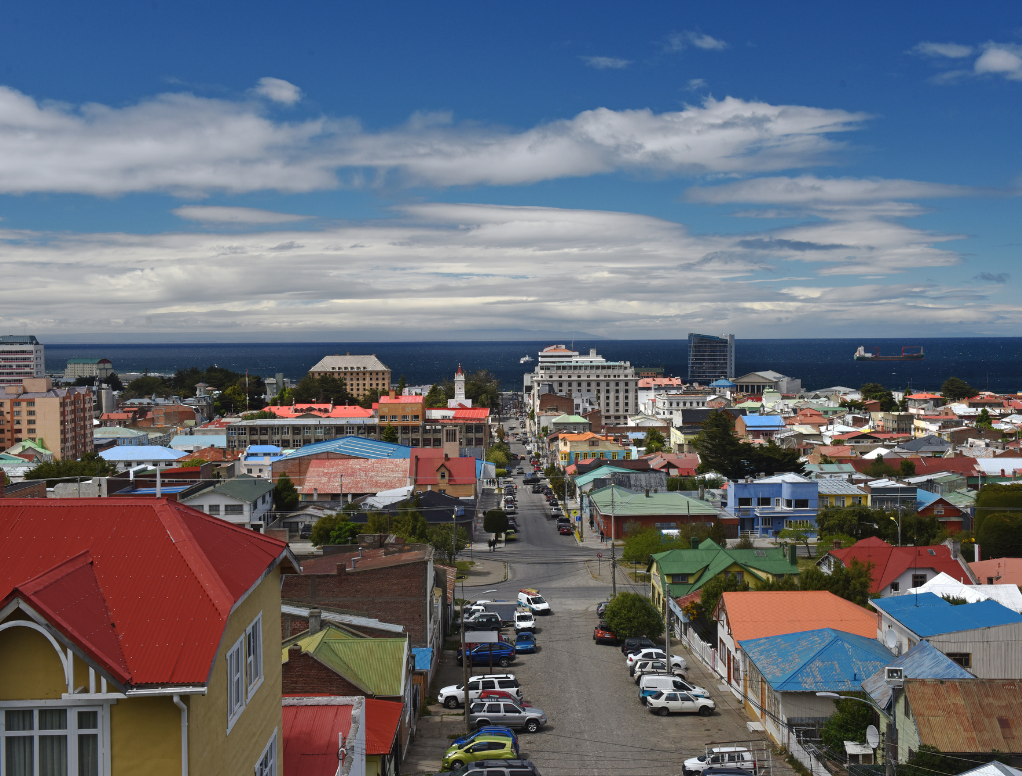
Punta Arenas is Chile's historic port city on the Strait of Magellan, and the gateway to the Chilean side of the region. It made its fortune in the wool boom, and you can still see it in the grand mansions around the main square, like the Palacio Sara Braun, and in the city's famous cemetery.
Most clients will only need a night here, on the way to Chilean Tierra del Fuego or Puerto Williams. Add an extra night to do the day trip to the penguin colony on Magdalena Island.
Where to stay: La Yegua Loca. A boutique hotel in a century-old building on the hill above town with views over the Strait of Magellan. It's quirky and full of personality, with a good restaurant on site. It's walkable to the main square.
Seasonality
Timing makes a big difference this far south. The weather, what's open, and which animals are around all change dramatically through the year.
Weather
The seasons have extreme swings at this latitude. Spring, summer, and fall (October to April) are the best times to visit. Even in peak summer, Tierra del Fuego gets around 17 hours of daylight and averages only about 50°F. It's never truly warm down here, and the weather can turn in an hour any time of year, so pack layers whatever the month.
Ushuaia sees highest volumes of Antarctic bound travelers from December to late February.
Isla Navarino all but shuts down in the low season (April-September.)
Winter months (May-September) attract skiers to Cerro Castor, Ushuaia’s ski resort.
Wildlife
Most wildlife peaks in the main season. Some species are seasonal, while others stick around all year.
King penguins live at Bahía Inútil year-round, but breeding season starts in November.
Magellanic penguins can be seen from Ushuaia (Isla Martillo) and Punta Arenas (Isla Magdalena) from October to April, with chicks around December and January.
Gentoo penguins share Isla Martillo with the Magellanics from October to April. It's one of the few places to see both species side by side.
Humpback whales are best seen December to April in Francisco Coloane Marine Park, on dedicated trips from Punta Arenas. They're occasionally spotted in the Beagle Channel too.
Sea lions and cormorants are on Beagle Channel boat trips year-round.
Andean condors soar over Paso Garibaldi, and guanacos roam the open steppe, year-round.
Itinerary Ideas
These are starting points, not fixed itineraries. Adjust the nights to your clients' pace, and always leave a buffer day around any small-plane flight or boat crossing.
Across Tierra del Fuego, about 9 nights. The main island end to end, from the Argentine side to the Chilean side.
Fly into Ushuaia. Stay 3 nights at Los Cauquenes or Arakur, with a day trip to Puerto Almanza.
Drive north over Paso Garibaldi, stopping in Tolhuin for lunch at La Unión. Stay 2 nights at Estancia Cabo San Pablo.
Continue north and cross into Chile at San Sebastián, then head south into the remote interior. Stay 2 nights at Lodge Deseado.
Drive to Bahía Inútil to see the king penguins, then take the ferry from Porvenir across the Strait of Magellan. Stay 1 night at La Yegua Loca in Punta Arenas.
Fly out of Punta Arenas via Santiago.
The full archipelago, about 12 nights. Both countries and both sides of the Beagle Channel, for clients who want to see it all.
Fly into Punta Arenas via Santiago. Stay 1 night at La Yegua Loca.
Fly to Puerto Williams. Stay 3 nights at Errante Ecolodge on Isla Navarino.
Take the speedboat across the Beagle Channel to Ushuaia. Stay 3 nights at Los Cauquenes or Arakur, with a day trip to Puerto Almanza.
Drive north over Paso Garibaldi, stop for coffee and pastries in Tolhuin. Continue to the Atlantic coast. Stay 2 nights at Estancia Cabo San Pablo.
Drive back to Ushuaia for 1 night, then fly to Buenos Aires.
For anything not covered here, reach out and we'll help you build it.